

ZikG // Shutterstock
Can you sue a grocery store for a slip and fall?
For most shoppers, going to the grocery store is a routine errand, not a place where they expect to fall and get hurt. While falls are often associated with older adults, they can happen under the most ordinary circumstances to people of all ages, and research shows that the consequences can result in more than a bump or bruise.
According to statistics from the Centers for Disease Control and Prevention (CDC), accidental falls are a leading cause of unintentional injury in the United States. Over 410,000 people died from fall-related injuries over a recent 10-year period. During that time, for every person who died, 34 others were hospitalized, and 164 were treated and released from emergency rooms.
While the CDC data focuses on all types of falls — at home, in the workplace, and other public locations — research specifically related to grocery store falls is much more limited. However, in a 2001 study published in the Journal of Prevention & Intervention in the Community, researchers examined slips and falls in malls and stores, identified common causes, and offered recommendations for retailers to protect their customers.
David Resnick & Associates, P.C., explained the liability risks for grocery stores when it comes to slip-and-fall claims.
Fruit — A Surprising but Significant Hazard in the Data
The researchers in the 2001 study investigated closed slip, trip, and fall insurance claims involving a chain of grocery stores in the Midwestern U.S. over 36 months and 22 malls over 24 months across the continental U.S. The causes of the majority of injuries in the supermarkets aligned with expected hazards, such as spilled water, wet objects, and solid foods. Grapes were a notable hazard, accounting for 5% of all slip-and-fall accidents in the study.
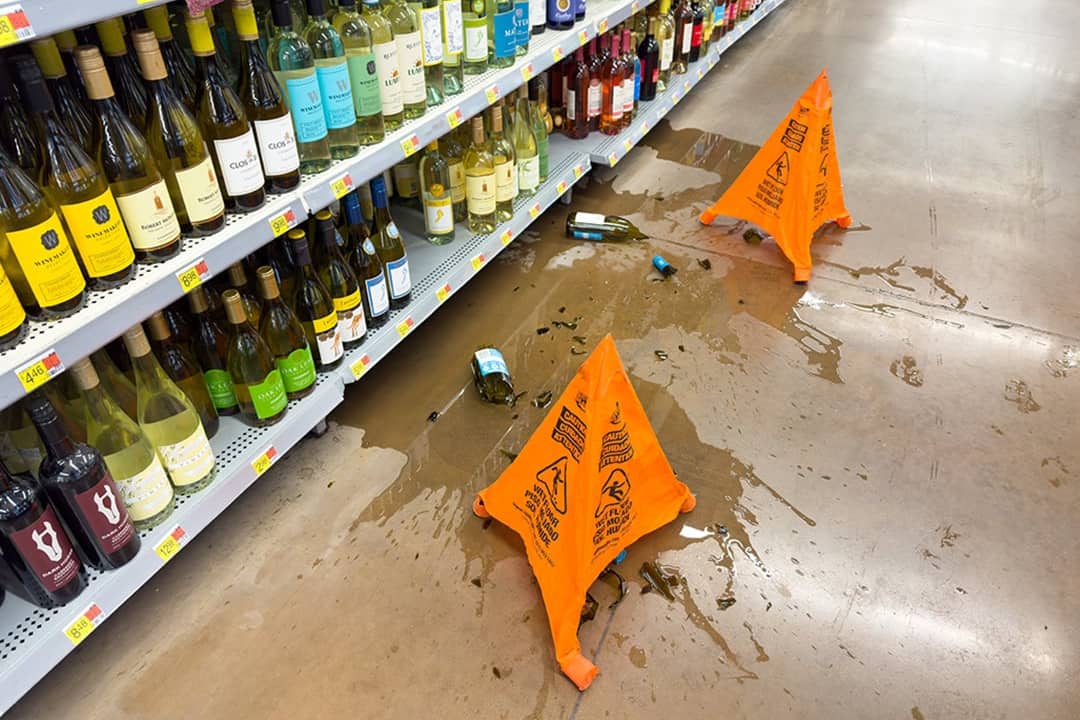
Other common causes of slips, trips, and falls in grocery stores include uneven surfaces, cluttered aisles, loose or damaged floor mats, or the absence of floor mats in bad weather, all of which increase the likelihood of falls. Without regular inspections, proper housekeeping, clear cleanup policies, and placement of warning signs to notify customers of hazards, grocery stores can face potential liability for customer injuries.
Legal Ramifications of a Slip and Fall
When a person suffers an injury because of a dangerous condition at a business, private property, or public space, they may be able to file a premises liability claim against an owner, tenant, occupier, or other responsible party. Premises liability is a branch of state tort law that allows a person to pursue compensation when a hazard causes them harm.
In a premises liability or slip-and-fall claim, the accident victim generally must prove a property owner or other liable party was negligent in their management of the property. According to the Legal Information Institute at Cornell Law School, proving negligence generally requires establishing five elements:
- Duty ‒ In the grocery store context, establishing that the store had a legal responsibility to keep its premises reasonably safe for customers. Property owners should either correct known dangers or warn shoppers of them.
- Breach – The evidence must show the store failed to keep the property safe or warn customers of the dangerous condition. In many cases, this would mean the grocery store knew or reasonably should have known about the hazard and failed to address it.
- Causation – Proving that the store’s breach directly caused the injury. The accident must have resulted from an unsafe condition, not unrelated factors.
- Foreseeability – The injury was reasonably predictable because of the grocery store’s negligence, such as by leaving a spill on the floor for an extended time.
- Damages – Demonstrating that the victim suffered actual losses like medical bills, lost wages, and pain or suffering.
Each state has a deadline for filing a slip-and-fall claim, known as the statute of limitations. People injured in grocery store slips, trips, or falls must file suit before the limitations period expires or risk losing their right to pursue compensation in court. While most slip-and-fall claims are resolved through settlements with the grocery store’s insurer, filing before the statute of limitations expires preserves the person’s right to sue if settlement talks break down. The deadline varies by state and by each person’s individual circumstances, so slip-and-fall victims may want to consider consulting an attorney before moving forward.
This story was produced by David Resnick & Associates, P.C., and reviewed and distributed by Stacker.

